
Friday, May 18, 2012
The Three Pillars of Personal Testimony

Friday, April 20, 2012
How to Overcome Temptation and Trials: Why the Sunday School Answers are not Enough

There is a misconception about the so-called Sunday school answers (prayer and scripture study and church attendance) that I wish to dispel:
The acts of prayer and scripture study and even church attendance, while vital components in our personal efforts to become more like Christ, do not of themselves confer upon anyone any kind of talismanic protection, be that from temptation, trial, or depredation.
Case in point: it is common to hear people who are presented with a grievous spiritual challenge such as same gender attraction, or an addiction of some kind, etc. who declare that they feel that if only they could pray even harder and be even more diligent in studying their scriptures then they might be able to "fix" themselves. Their hope is that by being "more righteous than righteous" they can somehow demonstrate to God the sincerity of their desire to be rid of the "thorn in the flesh" which plagues them. They are inevitably disappointed in this effort, which often leads to disillusionment and frustration on their part, and more often than not this leads them to give up on themselves and/or the church, or even God.
Thursday, April 12, 2012
Is it a sin if I don’t go to church? Am I a bad person if I do not attend church regularly?

We have been commanded to attend church and to worship God on the Lord’s day in many places throughout the scriptures. One of the Big Ten is to keep the Sabbath day holy. The author of Hebrews (v. Hebrews 10:23-25) enjoins us as Christians to:
...Hold fast the profession of our faith without wavering; (for he is faithful that promised;) And let us consider one another to provoke unto love and to good works: Not forsaking the assembling of ourselves together, as the manner of some is; but exhorting one another: and so much the more, as ye see the day approaching.
Paul goes on to exhort us to: Let the word of Christ dwell in you richly in all wisdom; teaching and admonishing one another in psalms and hymns and spiritual songs, singing with grace in your hearts to the Lord. (Colossians 3:16)
A more specific set of instructions is contained in Doctrine and Covenants section 59:7-12 where the Lord commands:
Thou shalt thank the Lord thy God in all things. Thou shalt offer a sacrifice unto the Lord thy God in righteousness, even that of a broken heart and a contrite spirit. And that thou mayest more fully keep thyself unspotted from the world, thou shalt go to the house of prayer and offer up thy sacraments upon my holy day; For verily this is a day appointed unto you to rest from your labors, and to pay thy devotions unto the Most High; Nevertheless thy vows shall be offered up in righteousness on all days and at all times; But remember that on this, the Lord’s day, thou shalt offer thine oblations and thy sacraments unto the Most High, confessing thy sins unto thy brethren, and before the Lord.
Just because we have been commanded to attend church doesn’t mean that you should attend church just because you are afraid that you will be punished for skipping church. Compulsory church attendance defeats the purpose of going to church in the first place. I have found that there is a tendency among members of the LDS church to equate regular attendance with righteousness. This is often accompanied by the implicit conclusion that those who do not attend church regularly must therefore be wicked in some way. While it is assuredly true that those who are truly converted (and who therefore are striving to be as righteous as a flawed mortal can be) tend to attend church as regularly as is within their power (out of a sincere love and devotion to God), it does not necessarily follow that those who attend church regularly are, by default association, righteous by virtue of their regular attendance alone.
"Some have come to think of activity in the Church as the ultimate goal. Therein lies a danger. It is possible to be active in the Church and less active in the gospel. Let me stress: activity in the Church is a highly desirable goal; however, it is insufficient. Activity in the Church is an outward indication of our spiritual desire. If we attend our meetings, hold and fulfill Church responsibilities, and serve others, it is publicly observed. By contrast, the things of the gospel are usually less visible and more difficult to measure, but they are of greater eternal importance. For example, how much faith do we really have? How repentant are we? How meaningful are the ordinances in our lives? How focused are we on our covenants?" (Donald L. Hallstrom, "Converted to His Gospel through His Church", Ensign May 2012)
Wednesday, December 14, 2011
What Does A Prophet Actually Do?
A friend of mine, who is only nominally a member of the LDS Church, recently posted this short (34 second long) video on Facebook. While I find the video to be a little childish, and feel that it shows a distinct lack of understanding on the part of its creators, I also find it useful as a gateway through which to address certain misconceptions in the world and among the members of the church concerning precisely what it is that a prophet of God does (and does not) do, how prophecy functions, and how each of us can recognize a true prophet at work.
This video was posted on Youtube by someone who goes by the name "Smithbusters," which by itself should tell you that it is not intended to flatter the Church of Jesus Christ of Latter-day Saints, and that those who posted the video hardly represent a credible or objective source. However it does raise some interesting questions like: "Why isn't General Conference filled with predictions about the next big financial crash or weather disaster?" or, "Why haven't there been any major changes to the standard works in 20 or more years?"
I feel that I should respond to these questions, and this video, by first stating that I feel that the people who posted the video do not have a proper understanding of what it is that a prophet actually does, but then again if they did, we wouldn't be having this discussion. More to the point, there are many people (including some members of the church) who are less than entirely clear as to what exactly it is that a prophet actually does.
For many people (in America anyway) this problem has much to do with the fact that, in my experience, most Americans seem to get the bulk of their religious knowledge from sources such as the movies, the History channel, and the Discovery channel.
If you rely on sources like these to get your knowledge, here is what you will learn:
This video was posted on Youtube by someone who goes by the name "Smithbusters," which by itself should tell you that it is not intended to flatter the Church of Jesus Christ of Latter-day Saints, and that those who posted the video hardly represent a credible or objective source. However it does raise some interesting questions like: "Why isn't General Conference filled with predictions about the next big financial crash or weather disaster?" or, "Why haven't there been any major changes to the standard works in 20 or more years?"
I feel that I should respond to these questions, and this video, by first stating that I feel that the people who posted the video do not have a proper understanding of what it is that a prophet actually does, but then again if they did, we wouldn't be having this discussion. More to the point, there are many people (including some members of the church) who are less than entirely clear as to what exactly it is that a prophet actually does.
For many people (in America anyway) this problem has much to do with the fact that, in my experience, most Americans seem to get the bulk of their religious knowledge from sources such as the movies, the History channel, and the Discovery channel.
If you rely on sources like these to get your knowledge, here is what you will learn:
Thursday, December 8, 2011
Death Is Not The End
I wrote this post a few weeks after my mother died of breast cancer. At the time I was mostly interested in collecting those scriptures that testify of a life that continues beyond the grave, and I wasn't in a place emotionally in which I could write down my own thoughts on the subject. After a few years I finally feel like I have some perspective from which I can approach this tender issue, and so I decided to revisit this subject in order to add my own thoughts and perspective.
Since the beginning of time, man has been confronted by the awful reality and immutability of death. Death is our universal heritage, and it will come to all who have lived, are living, and who will ever live upon the Earth. In its implacable certainty and chilling finality, death has inspired fear and worry in countless generations as long as there have been humans who have survived after losing those closest to them to death. One of the great mysteries of existence is what happens to us after we die. Where do we go? What happens to us when we get there? Should I be afraid when my time comes? Do we go anywhere at all, or do we end up as worm food because there is nothing after this life but oblivion? Is death the end? These questions have puzzled, tormented, and fascinated us throughout our history; however, on a more personal level, questions like these proceed out of the genuine ache of loss and the deep, painful, and sincere desire to know: Will I ever see my loved ones again?
In every age, poets, artists, parents, priests, and oracles have struggled in an effort to provide answers to the universal question which confronts all men. They have produced elaborate mythologies and cosmologies in order to explain a mystery which in truth confounds them as much as it does the rest of us. Without a true understanding of where we came from, why we are here, and where we are going how can these people, however well-meaning they may be, provide any answers that shed any real light on our fate after mortality? The fact is that they can't, because they lack the basic truths that are necessary to provide meaningful answers to the deep questions of the soul. Fortunately there is someone who knows exactly why we are here, and where we are going, because He is the one who put us here in the first place. God cares about His children, and He mourns when we mourn. From His earliest recorded dealings with men, through the means of His holy prophets, God has provided answers and comfort to those in every age who seek solace in the knowledge that death is indeed not the end.

In the grand scheme of things, our time in this life is incredibly short, or as Macbeth opines upon hearing that his wife is dead, "Out, out, brief candle! Life's but a walking shadow, a poor player that struts and frets his hour upon the stage and is heard no more." (William Shakespeare, Macbeth, Act 5, Scene 5). How great it is to know that there is hope beyond this short life! That although our lives are altogether too brief, there is an answer to the question "If a man die, shall he live again?"
Man that is born of a woman is of few days, and full of trouble. He cometh forth like a flower, and is cut down: he fleeth also as a shadow, and continueth not. Seeing his days are determined, the number of his months are with thee, thou hast appointed his bounds that he cannot pass;
For there is hope of a tree, if it be cut down, that it will sprout again, and that the tender branch thereof will not cease. Though the root thereof wax old in the earth, and the stock thereof die in the ground; Yet through the scent of water it will bud, and bring forth boughs like a plant. But man dieth, and wasteth away: yea, man giveth up the ghost, and where is he? As the waters fail from the sea, and the flood decayeth and drieth up: So man lieth down, and riseth not: till the heavens be no more, they shall not awake, nor be raised out of their sleep. If a man die, shall he live again? all the days of my appointed time will I wait, till my change come. (Job 14:1-2; 5;7-12; 14)
Monday, December 5, 2011
First Presidency introduces BibleVideos.lds.org at Christmas Devotional

"The First Presidency of The Church of Jesus Christ of Latter-day Saints (Mormon) urged Church members to focus on Jesus Christ this holiday season, and also announced the launch of a new “Life of Jesus Christ” Bible video website at the annual First Presidency Christmas devotional."
Click HERE for full article.
Click HERE to "Learn about Jesus Christ through free videos based on the King James Version of the Bible. Watch online or download mobile app."
Wednesday, November 2, 2011
"If You're So Righteous Why Aren't You Rich?" and other dumb ideas about how God's blessings work.

This post is divided into three parts, each one dealing with a common misconception about how prayer and blessings work, and about our relationship with God. The one dealing with riches and righteousness is number two, however I recommend that you read each part in order, as I intended each point to build off of each preceding principle.
1) God owes me blessings because I earned them through my own obedience.
This one is tricky because it arises out of a true statement made in D&C 130:20-21 which says:
There is a law, irrevocably decreed in heaven before the foundations of this world, upon which all blessings are predicated—And when we obtain any blessing from God, it is by obedience to that law upon which it is predicated.
This scripture is a fairly straightforward statement that says that if you want to experience the blessings that come from living the law of tithing, or the Word of Wisdom, or Temple worship or any other law of God then you have to be willing to obey that particular principle before you can enjoy said blessing. What this statement DOES NOT say is that God owes us blessings for obedience, whether that be obedience in general or obedience to a particular principle.
Sunday, August 28, 2011
Why Repentance Brings Hope

Repentance is probably one of the most poorly understood terms in all of the gospel, despite the fact that it is among the first principles and ordinances that form the basis of the Gospel of Jesus Christ. Many people are afraid of repentance; some are afraid of the consequences that are likely to occur if they were to admit to any wrong doing, and others dread the potential loss in social standing and status that can come with an admission of sin. There are those who resent the notion that they need to repent, because they insist that they do not sin and they therefore resent the implication that they might be a sinner. Others will not accept that they even need to repent, because they do not think that what they are doing is wrong and they therefore resent those that suggest that they might need to change. Almost all of these people mistakenly think that repentance involves punishment and suffering, and therefore they tend to react badly when someone (a loving family member, a bishop, or a general authority) counsels them to repent. The reasons why people may have a problem with repentance are many, but principal among them is surely a fundamental misunderstanding of what actually constitutes true repentance. However, when one takes the time to contemplate and comprehend the true meaning of repentance, it becomes a sublime doctrine of love and forgiveness and relief from the burden of sin.
"[Repentance is] perhaps the most hopeful and encouraging word in the Christian vocabulary. We thank our Father in Heaven we are allowed to change, we thank Jesus we can change, and ultimately we do so only with Their divine assistance." (Jeffrey R. Holland, “Broken Things to Mend,” Ensign, May 2006).
Where Does the Word 'Repent' Come From?
When repentance is taught in the Old Testament, the original writers used either of two Hebrew verbs, nacham and shub. According to The Hebrew and Aramaic Lexicon of the Old Testament, nacham means “to be sorry, come to regret something, to repent.” Repentance is more than just feeling sorry for one’s actions though, and the prophets who wrote the Old Testament knew that, which is why they also chose to employ the verb shub. "Shub means ‘to turn from’," as Elder Theodore M. Burton explains:
Wednesday, May 4, 2011
From 1611 to 2011, King James Version of Bible Blesses Lives

Today is the 400th anniversary of the publication of the King James Bible. In honor of this milestone, The Church of Jesus Christ of Latter-day Saints has published an examination of the ways that this particular translation has blessed generations since it's publication.
From 1611 to 2011, King James Version of Bible Blesses Lives
In that same spirit, I have included some related posts from my own blog:
How to Become a Scripture Master
Do Mormons read the Bible? Six Tips to Help Make the Bible More Accessible.
Sunday, March 13, 2011
What To Do When Church is Boring: 3 Truths and 5 Tips to Make Church More Fulfilling.

Q: I feel frustrated because my church meetings often seem boring and unfulfilling. What can I do to make church more exciting or at least enjoyable?
A: You find church to be boring on occasion? Congratulations! That means that you are normal! My first piece of advice would be to relax about it and understand that it is OK to feel restless in church from time to time. I used to complain about boring church meetings all of the time, because I have had my own share of troubles when it comes to feeling engaged and fulfilled by my meetings. Then one day I noticed that I had stopped complaining. I was puzzled enough at this discovery that I paused to examine exactly what had changed to cause such a shift in my habits. As I reflected, I decided that I don’t think that my church meetings have changed all that much, but I am fairly sure that a vital change has happened in me to help me to overcome my boredom and appreciate my time in church. In this post I have tried to distill what helped me to resolve this problem in my own mind and heart, and to that end, I have divided my response into two parts:
Wednesday, December 8, 2010
Notes for Romans Ch. 1

Editor's note: these notes were developed for my own use during the Bible study that I teach, and are intended to accompany the text in Chapter one of The Epistle of Paul the Apostle to the Romans. Any other use than that which was intended could result in catastrophic comprehension failure on your part, and should not be undertaken.
a) Written from Corinth within a year or so of Paul’s writing 2 Corinthians (between 57-58)
b) Paul wintered in Corinth for 3 Months (v. Acts 20) to wait for safe sailing weather-also good business ( paul was a sail-maker/leather-worker/tent-maker)
c) Jews (including Jewish Christians) had been expelled from Rome in 49 CE by the emperor Claudius over unrest concerning “one Chrestus” (according to Suetonius)-likely refers to Christ.
d) It is likely that the Christian population in Rome consisted largely of gentile Christians (see 1:13), however there are hints of a culture clash that may have resulted as Jewish Christians began to trickle back into Rome.
V1 Servant The Greek for this word means: 1) a “slave” who completely belongs to his owner and has no freedom to leave, and (2) a “servant” who willingly chooses to serve his master.
[In OT] can refer to one who holds the status of a high official in the Lord’s kingly administration. As in Ex. 14:31
1 Cor 7:20-21
Thursday, November 25, 2010
LDS Church clarifies policies regarding social issues with the release of new administrative handbook

The Church of Jesus Christ of Latter-day Saints recently released a new two volume handbook for use by it's lay leaders. In an unprecedented move, however, the Church leadership has made the second volume of the handbook available to the public through lds.org. The second volume deals mainly with administrative and leadership issues, but it also contains many statements on various social issues which have never before been available to the public. This has been greeted enthusiastically by some members and even some non-members who have sought instruction concerning specific church policies regarding issues such as: birth control, abuse, surrogate motherhood, suicide, artificial insemination, homosexuality, and many other issues. However, according to LDS Newsroom, "Church leaders have emphasized that while the handbook is an essential guide in a large church with a lay ministry, it is not scripture, and individual leaders [and presumably individual members to a lesser degree] are expected to seek inspiration and use judgment when administering their church duties."
Below is a link to the LDS Newsroom article, and below that is a link to the actual handbook.
Church Leaders to Release New Administrative Handbook
http://new.lds.org/handbook/handbook-2-administering-the-church?lang=eng
Here is a direct link to the section of the handbook devoted to "policies on moral issues":
http://new.lds.org/handbook/handbook-2-administering-the-church/selected-church-policies?lang=eng#21.1.7
Saturday, September 25, 2010
How to Give a Simple Answer to a Casual Question About the Church.
 The 2 most basic points you should cover, plus 7 points of introduction to the beliefs of The Church of Jesus Christ of Latter-day Saints, followed by tips on how to effectively share the gospel in an informal setting.
My friend D.T. sent me the following question which I feel is an important one for all church members who know that they need to share the gospel, but don't feel like they quite know how to go about it.
"How would you answer a question about your religion in an informal sense, for instance in an impromptu online chat?"
Naturally, my answer would depend on the
contents of any specific question, but I would generally respond to a casual question
about what we believe by touching briefly on two major points, with an emphasis
on establishing common ground with those who are curious about our faith.
1) We believe in Jesus Christ. The first of our thirteen principal articles of faith states that, “We believe in God, the Eternal Father, and in His Son, Jesus Christ, and in the Holy Ghost.” We believe that Jesus Christ died for the sins of all mankind and that he was resurrected so that all mankind might live again. We worship Him as the living Son of the living God, and we believe that it is through Him that all men may be saved if they will have faith in His name, repent of their sins, and follow the principles and ordinances of the Gospel that He taught.2) The gospel blesses families. Most people care very little for a history lesson, or a complicated discussion regarding doctrine or scripture, but they do have a family, and the knowledge that they can be together with their family for eternity is a big deal to many people. More importantly, I found on my mission that a lot of people responded even more enthusiastically to the idea that by living the gospel as a family they would actually WANT to be together for eternity.
In most casual interactions regarding
the church the curious person generally only wants and/or needs a small amount of
information about the church. Therefore I find it is wise to stick to the most basic
and fundamental elements of our faith. If
someone asked me to give them more than just the basics which I have mentioned
above, I would focus on some or all of the following elements (I would probably
stick to some variation of these simplified headers alone, depending on the
situation, and most importantly, on the guidance of the spirit):
1) Jesus Christ organized a church: We
believe in Jesus Christ, which is an important thing that we have in common.
What you may not know is that while Jesus walked the Earth He organized a
church that was built on a foundation of apostles and prophets, who were called
and ordained by Jesus Christ himself. Jesus gave the twelve apostles power to
work miracles, teach, and baptize in his name. These men were also authorized
by God to direct the Church after Christ’s death. You can read about this in
the Bible. We also use the Bible, and we consider it to be God’s word.
2) The Church of Jesus Christ was lost:
Not long after Christ’s death, the Lord’s apostles and prophets were killed and
not replaced. Without the guidance of the Lord’s chosen apostles and prophets
many of the truths that were taught by Jesus and His apostles were lost or
polluted over time through the mistakes of well-meaning but uninspired men, or
through deliberate interference by enemies of the gospel. This meant that the
church that Jesus Christ set up, and which was guided by those He had called
and ordained, was lost.
3) The same Church of Jesus Christ was
restored: Many different churches arose over the centuries since the death of
the apostles, each one using the same basic Bible, and each claiming to represent
the will of the Lord. In 1820, a young boy named Joseph Smith prayed and asked
God which church he should join. God and Jesus Christ appeared to him in a
vision and told him not to join any of them because the church that Jesus had
set up was no longer on the Earth. Joseph was chosen by God to become the first
prophet on Earth since the death of the prophets and apostles of New Testament
times. As a prophet of God, he was called to restore and organize the same
church that Jesus Christ set up, which had been lost with the death of the
original apostles.
4) “By their fruits ye shall know them”
The Savior Himself taught us how to recognize a true prophet of God in Matthew
7:15-20:
“Beware of false prophets, which come to
you in sheep's clothing, but inwardly they are ravening wolves. Ye shall know
them by their fruits. Do men gather grapes of thorns, or figs of thistles? Even
so every good tree bringeth forth good fruit; but a corrupt tree bringeth forth
evil fruit. A good tree cannot bring forth evil fruit, neither can a corrupt
tree bring forth good fruit. Every tree that bringeth not forth good fruit is
hewn down, and cast into the fire. Wherefore by their fruits ye shall know
them.”
The “fruit” of Moses was the Ten
Commandments; the “fruit” of Noah was the Ark, and so on. The fruit of a
prophet is the work that he does at God’s command. By it you can know whether
or not he truly speaks for God.
5) The Book of Mormon is the evidence
(the “fruit”): In New Testament times, The Lord’s apostles and prophets kept a
record of their testimonies concerning the reality and divinity of the Savior
Jesus Christ. They also bore witness of the resurrection of the Lord Jesus
Christ. The New Testament is the “fruit” by which you can know that the
apostles and prophets who wrote it truly acted under God’s direction. On the
other side of the world, at around the same time, other prophets kept a similar
record of their testimonies of the reality and divinity of the Savior, and they
bore witness of His resurrection when the resurrected Lord appeared to the
people here in the Americas. This record is called the Book of Mormon. God gave
the Prophet Joseph Smith this ancient record, and with it he was given the
ability to translate this record for our day. The Book of Mormon is his
“fruit”, and also the fruit of the Lord's church in our day.
*You may also wish to emphasize that members of the Church of Jesus Christ of Latter-day Saints also believe the Bible to be the word of God, and that we value it equally as scripture alongside the Book of Mormon. The Book of Mormon is in no way intended to replace or supersede the Bible, and we live our lives according to the precepts taught in both books.
6) You can know that this is Christ’s
church if you will read the Book of Mormon and ask God in prayer if it is true.
You have to taste a fruit to know if it is good. If you will read from the Book
of Mormon and sincerely pray and ask God to tell you if it is true, the Lord
will tell you that it is true through the Holy Ghost. If it is the word of God,
then Joseph Smith is a prophet of God. If Joseph Smith is truly a prophet, then
the Lord truly has called him to restore and organize the Church of Jesus
Christ today, just as it was organized by Jesus and His apostles and prophets
in New Testament times. The only church that you need to join is the one that
Christ set up, so shouldn’t you find out if this is the one?
7) We are the Church of Jesus Christ in
this day. The name “Mormon” is just a nickname. The actual name of the church
is The Church of Jesus Christ of Latter-day Saints. As you might have gathered
from our name, we are The Church of Jesus Christ (the same church that Christ
set up during New Testament times). The “Latter-day” part of our name refers in
part to the fact that we are that same church but in this day and age instead
of two thousand years ago. In New Testament times, the members of Christ’s
church were called saints. Since we are members of the same church we are also
called saints. We have a prophet and twelve apostles, who are called of God
just like those prophets and apostles in New Testament times. You should come
to church with me Sunday to see what the Church of Jesus Christ is like.
Sharing
the gospel naturally
Any returned missionary can tell you
that my seven points closely mirror certain portions of the introductory lesson
that the full-time missionaries teach to their investigators. That is because
these points are a good simple introduction to our church.
Many members worry that they do not know
enough about the gospel themselves to feel secure about sharing it with
others. While I encourage everyone to
learn more about the gospel and church of Jesus Christ, most people do not want
to hear a long-winded discussion of doctrine, so you don’t have to worry about
your scripture-knowledge (or your relative lack thereof). A simple testimony
that this is Christ’s church is often sufficient, and you can leave the tough
stuff to the missionaries.
Beyond that, I would suggest sharing
what Jesus Christ and His gospel (and your membership in His church) have done
for you personally to bless you in your life. Most people are missing something
in their lives, and that something is usually true joy. If you can help them to
see that the gospel of Jesus Christ has brought you true joy in your life, they
will want for themselves that which you have already obtained.
If the opportunity presents itself, I
have often found that the best answer to almost any question about the church
is an invitation along these lines: “Why don’t you come with me to my church
this Sunday and find out?” If this is too direct for you, consider inviting
them to a ward or stake party or service project, or to a mutual or FHE activity
(if those apply). At the very least this
will help you to introduce the Church and its members to your friend in a
relatively non-threatening way. I prefer
inviting people to church because I feel that the spirit is there more
strongly, plus your guest is more likely to hear discussions about our beliefs
at church than he is at a ward potluck dinner, but you have to start somewhere.
Who
am I? I’m a Mormon!
I think that the church's new campaign
that showcases various regular folk who declare "I’m so-and-so, and I'm a
Mormon" is inspired. It is a lot easier for people to understand us and
feel friendly toward the church if they know that the coworker they respect, or
the teacher who cares so much about their children, is a member of the Church
of Jesus Christ of Latter-day Saints.
Conversely, it is a lot easier to demonize a group with whom you have
never knowingly had any meaningful contact.
The church will seem a lot less strange to others when people no longer
see Mormons as strangers.
You as an individual can be a walking
testimony of the gospel and for the church if you are worthy of the
companionship of the Holy Ghost. Most people won't be able to put their finger
on what makes you different, but they know that they want it, whatever it is.
Your job then comes down to prayerfully seeking the direction of the Holy Ghost
to know when, where, and with whom to share the gospel. On the whole, though,
there aren't a lot of people who don't need to hear the gospel, so don't
over-think it. You can turn almost any inquiry into the church into an
invitation to join you at church on Sunday, where the spirit will be strong, and
at the very least they will see that Mormons aren't crazy Satan worshipping
cult members.
Don’t worry too much about losing your
friends by bringing up religion. As long
as you are sensitive and appropriate in your approach to sharing the gospel, your
friends will stay your friends, especially if they know that your invitation
proceeds out of sincere feelings of friendship, and that you will not hold it
against them if they decline. You should also take steps to help your friends
to understand that you will not harass them about religion if that makes them
uncomfortable. Most of your friends will be flattered that you thought enough
of them to ask, even if they ultimately do not take you up on your offer. Most
importantly, keep it casual-don't think that you have to fall down weeping with
the power of your testimony-the person in question probably will be happiest if
you give them an answer to their question in the most simple and direct way
possible.
Here is an article called “Sharing the Gospel Naturally,” which features some good tips for ways to break the ice with
your friends without making a big production out of it. It was published on the
LDS church’s own official website, and it also includes links to ten church produced
videos which you can share with your friends online.
Sharing
the gospel online
As for a situation in which you may be
chatting with a stranger online, short and sweet is the best, and if they
become impolite (as anonymous people on the internet are often wont to do) you
can bear your testimony and get out of there, which is essentially what our
young missionaries are told to do when a person tries to draw them into an
argument. The spirit will leave when you start arguing with someone, so you are
just wasting everybody's time if you think that an argument will convince
someone of the truth of the gospel message (only the spirit can truly do that).
If you feel that a belligerent individual is simply misinformed, you can send
them a link to Mormon.org for answers to their concerns. Here is a list of helpful tips for sharing the gospel online:

For more tips on the sharing the gospel (especially online) you should read the full article "The Do’s and Don’ts of Defending Your Beliefs" from which the above graphic is taken. This article contains excellent advice from the Church magazines about the right way and the wrong way to go about defending the faith, sharing our beliefs, and standing up for what is right.
For more tips on the sharing the gospel (especially online) you should read the full article "The Do’s and Don’ts of Defending Your Beliefs" from which the above graphic is taken. This article contains excellent advice from the Church magazines about the right way and the wrong way to go about defending the faith, sharing our beliefs, and standing up for what is right.
The Church of Jesus Christ of Latter-Day
Saints has also recently provided a series of short online videos designed to give a
simple introduction to the church which you might find convenient and useful
when you are called upon to explain and introduce the church and the restored
gospel of Jesus Christ to others:
Thursday, August 26, 2010
Bible Study 2 Corinthians 3 Notes, Quotes, and Cross-references

Due to popular request I have decided to post my notes from my most recent Bible study. Those of you who were there might be interested to find that I skipped over roughly three quarters of the material contained here for the sake of time.
After 3:3 3 Nephi 9:19-20
And ye shall offer up unto me no more the shedding of blood; yea, your sacrifices and your burnt offerings shall be done away, for I will accept none of your sacrifices and your burnt offerings. And ye shall offer for a sacrifice unto me a broken heart and a contrite spirit. And whoso cometh unto me with a broken heart and a contrite spirit, him will I baptize with fire and with the Holy Ghost, even as the Lamanites, because of their faith in me at the time of their conversion, were baptized with fire and with the Holy Ghost, and they knew it not.
Wednesday, July 14, 2010
Can Men Be Gods? What the Bible says about exaltation.
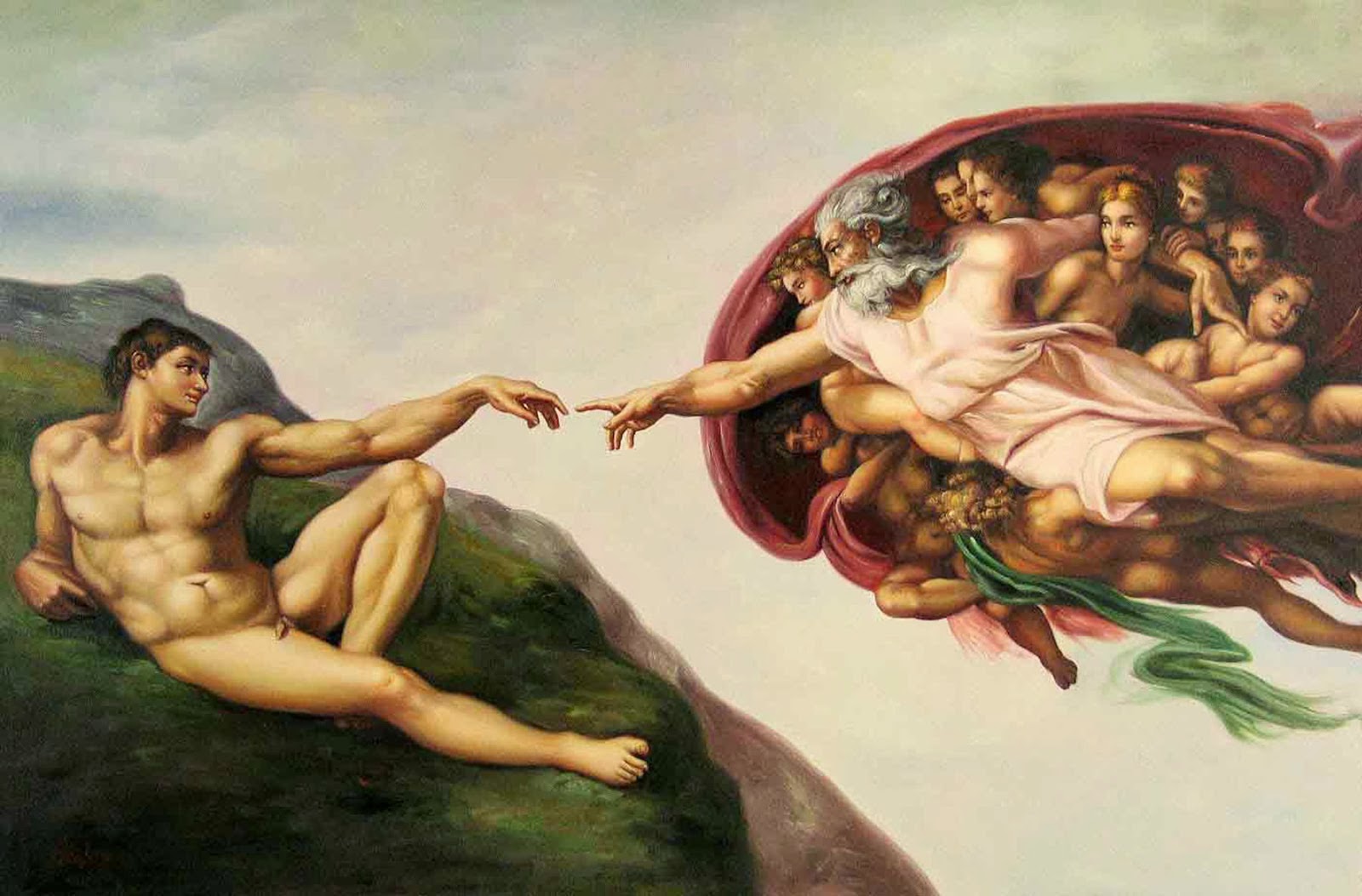
Q: I have a nonmember friend who read a chapter in a world religion book about Mormons and it said that we believe we will become God and have our own planet someday and now she thinks we are freaks. How do you respond to this and what scriptures are there in the Bible that support such a claim?
Sunday, June 6, 2010
Why Being a Child of God is Not Enough

The promised blessings of God to the
faithful are glorious and inspiring. Among them are “thrones, kingdoms,
principalities, and powers, dominions, all heights and depths.” And it takes
more than a spiritual birth certificate or a “Child of God Membership Card” to
qualify for these incomprehensible blessings” (Dieter F. Uchtdorf, “Living the
Gospel Joyful,” General Women’s Meeting
Address, Sept. 27, 2014).
We are all born “naturally” as natural descendants of Adam, who was God’s son. We are also the spirit sons and daughters of God. It is in this general sense that all men can be called children of God. All men are children of God, and (all things being equal) all men have the same claim to the love of their Father in Heaven. Therefore we gain no particular distinction nor can we derive any special status above our fellows simply due to the fact of our divine heritage. Our divine origin is important, and vital to know about, but being born into this world as a child of God does not automatically confer any kind of righteousness, merit, or status upon us; nor does our divine pedigree, in and of itself, guarantee salvation for us in any way.
We are all born “naturally” as natural descendants of Adam, who was God’s son. We are also the spirit sons and daughters of God. It is in this general sense that all men can be called children of God. All men are children of God, and (all things being equal) all men have the same claim to the love of their Father in Heaven. Therefore we gain no particular distinction nor can we derive any special status above our fellows simply due to the fact of our divine heritage. Our divine origin is important, and vital to know about, but being born into this world as a child of God does not automatically confer any kind of righteousness, merit, or status upon us; nor does our divine pedigree, in and of itself, guarantee salvation for us in any way.
“But how do we attain [these blessings]?
The Savior has answered this question in our time: “Except ye abide my law ye
cannot attain to this glory. “For strait
is the gate, and narrow the way that leadeth unto the exaltation. “… Receive
ye, therefore, my law.”
For this reason, we speak of walking the
path of discipleship. We speak of obedience
to God’s commandments. We speak of
living the gospel joyfully, with all our heart, might, mind, and soul” (Dieter
F. Uchtdorf, “Living the Gospel Joyful,” General
Women’s Meeting Address, Sept. 27, 2014).
If we wish to inherit all that the
Father has, then we must become bound to him through more than just the
mere fact of our parentage. We were placed on this Earth in order
that we might have the opportunity, over time, to prove ourselves, and our
loyalty, to God. We demonstrate this loyalty and love by steadfastly and
valiantly keeping His commandments, and by binding ourselves to God through covenants made by means of ordinances such as baptism and receiving the gift of the Holy Ghost by the laying on of hands.
Putting Off the Natural Man
Why must we do all of these things in order to inherit all of the blessings which the Father wishes to give His children? As His children, should we not have some natural claim to our divine inheritance?
Unfortunately, we each make mistakes, and commit sins and transgressions. In our “natural” fallen state, which comes upon us as a consequence of the fall of Adam and Eve, we become “carnal, sensual, devilish, knowing evil from good” and thus, through sin, we become estranged from our Father in heaven. If we persist in our willful defiance of God’s laws (to say nothing of His love for us), we will become estranged from Him to the point that we may become “an enemy to God” even in this life (see Mosiah 16).
Unfortunately, we each make mistakes, and commit sins and transgressions. In our “natural” fallen state, which comes upon us as a consequence of the fall of Adam and Eve, we become “carnal, sensual, devilish, knowing evil from good” and thus, through sin, we become estranged from our Father in heaven. If we persist in our willful defiance of God’s laws (to say nothing of His love for us), we will become estranged from Him to the point that we may become “an enemy to God” even in this life (see Mosiah 16).
Tuesday, May 11, 2010
How to Become a Scripture Master: Tips to Improve Personal Scripture Study

I have divided this article into two parts. The first deals with the practical aspects of improving your scripture study, and the second deals more with the spiritual aspects of scripture study, especially the importance of incorporating the Lord's word into your life in every aspect of your life.
Part I: Just Do it! How to "find time" to read your scriptures, and how to make that time count.
Most people know that they should be reading their scriptures, but most of us struggle to incorporate meaningful scripture study into our daily lives. Many people that I talk to say that they don’t really need tips to improve their reading, but they would like tips on how to “get motivated” to read their scriptures. While I would argue that improving your understanding of the scriptures can only help in motivating you to read more often, I agree that this subject deserves a section of it’s own.
I have drawn up a list of tips that I have found personally useful in gaining motivation to search the scriptures, ponder upon them, and eventually gain insight into them through meaningful prayer. I have also included tips that will help make your personal study more meaningful, which will also help you to feel more inclined to study.
1. Just do it! If you wait until you “feel like it” it will never happen. According to W. Terry Whalin in his book “The complete idiot’s guide to Teaching the Bible” “feeling like it” is the least important factor that we should consider when it comes to living any aspect of the Gospel.
“Some Christians say they don’t feel like studying the Bible, or they don’t feel like praying, or they don’t feel like witnessing. Feeling has nothing to do with living the Christian life, for feelings come and go. The key to spiritual maturity is to live for Jesus Christ not because it makes us feel good, but because we know it is the right thing to do. I have discovered that if the only time I study the Bible, pray, or witness is when I feel like it, the devil makes sure I never feel like it.”
Wednesday, April 28, 2010
The Priesthood and Women: Are men and women equal in the church? What role does the priesthood play in a strong marriage?

Q: "Does it say in 1 Timothy that women should not be pastors?"
A friend of mine sent me this question some time ago in the wake of some controversy among a group of conservative churches concerning the role of women in the ministry. At the time she was interested in hearing what the Bible had to say on the question of whether or not women can hold the priesthood, and she was interested to see if my interpretation of certain passages coincided with that of certain factions within the debate. Recently I revisted my answer and expanded it to address an issue which more directly relates to women as they approach the Church of Jesus Christ of Latter-day Saints (both from within and from without). Namely the relationship between women and the priesthood (both in the time of Christ and His apostles as well as in this day and age), and the question of whether or not the seeming "exclusivity" of the priesthood constitutes sexism or gender discrimination. This is an issue that this particular friend had before she joined the church, and I know that she is certainly not alone in these misgivings. As I sought to address this question, I found that gaining an understanding of the role and function of the priesthood in an eternal marriage is crucial to finding the answer to these questions.
Wednesday, April 21, 2010
The Hard Facts About Temple Marriage as a Requirement for Exaltation.

A friend of mine (who is fairly knowledgeable about the church, even though he is not a member) asked me a series of questions after his (member) girlfriend made him read my post on the importance of and necessity for eternal marriage in the temple. Most of his questions dealt with our views on life after death, and they resulted in my seven part series on that subject. After all was said and done, he pinned me down and made me give him this direct answer concerning the hard facts when it comes to the requirements for exaltation. I deliberately elected to employ language which I felt was appropriately vague in my previous post on temple marriage, however he needed a more definite answer. My first post on temple marriage is more eloquent and exhaustive, and so you might find it helpful to review my previous post on Temple Marriage.
Q: I feel like I am missing one thing to tie it all together. Where in scripture (besides D&C 76:50-54,69-70) does it say that you need the saving ordinances performed at the temple (namely marriage) to be allowed into the celestial kingdom?
Wednesday, April 14, 2010
Christ and the Healing Power of the Atonement

A: My answer will be in two parts: The first will deal with Christ, and his power to heal all wounds (both physical and spiritual) through the atonement. The latter portion will deal with the faith that each individual must exercise in order that we might more fully partake of the power of the atonement. (p.s. I think some of the best stuff is at the end, so read the whole thing so it will make sense to you.)
Subscribe to:
Posts
(
Atom
)

