Showing posts with label Christlike attributes. Show all posts

Sunday, May 19, 2019

How the Book of Mormon Contains the Fullness of the Gospel


The introduction to the Book of Mormon states that it "contains the fulness of the everlasting gospel," a concept and phrase that is also found in a number of scriptures in the Doctrine and Covenants (see D&C 20:8-9). This phrase occasionally causes some confusion among those who read it. Many suppose that a “fulness” must mean that the Book of Mormon must contain a comprehensive catalog of all LDS doctrines, beliefs, and teachings.  This often leads some to wonder why the Book of Mormon does not deal with certain key doctrines of the faith, such as baptisms for the dead, celestial marriage, or exaltation. Others assume that this statement about the fulness must represent some kind of exclusivist truth claim, or a shot at the truth of the Bible. I believe that this confusion stems from a misconception concerning what the gospel actually entails, and a misunderstanding about what the Book of Mormon is actually supposed to do.

Thursday, June 7, 2018

5 Christian Classics Every Latter-day Saint Should Read


I have personally amassed an extensive library which consists of books on many subjects.  In particular, I have collected many books on religion, both by LDS authors, and also by non-LDS authors.  I am not a millionaire, and thus I can’t afford to buy every book I come across (as my wife occasionally has to remind me).  I therefore do my best to buy only those books which I consider to be classics on their subject.  However, even among my (admittedly) large collection of excellent books, there are certain books that stand out above the rest. Many of the best books in my library are written by LDS authors, but some of them are not. 
I have noticed in the past that some members of the LDS church tend to view books on religion written by non-Mormon authors as being somewhat suspect, or of being of less value than a book written by an LDS author. However, it is worth noting that many of my most beloved books by non-LDS authors are widely recognized as classics by people of all faiths.  In fact, you may recognize some of the authors mentioned on this list, as their writings are often quoted over the pulpit at General Conference.
It is true that books which come from outside our tradition may contain ideas that do not wholly jibe with our particular teachings, but that doesn’t mean that there is no benefit to be derived from reading such books.
In scripture, we are instructed by the Lord to “seek ye out of the best books words of wisdom; seek learning, even by study and also by faith” (see D&C 88:118).  In one of the articles of our faith we hold that “If there is anything virtuous, lovely, or of good report or praiseworthy, we seek after these things” (see A of F 1:13).
Here is a list of some of those “best books,” which I can personally attest are filled with things that are “virtuous, lovely, or of good report [and] praiseworthy.”  This list does not constitute a blanket endorsement of all of the doctrines or ideas contained within them (especially over and above the doctrines and teachings of the Church of Jesus Christ of Latter-day Saints).  However, there is much that is good and true in these books, which can be used to help us to better understand our own faith, and which can uplift and instruct us, as we read them under the guidance of the Holy Ghost. 

Thursday, April 9, 2015

How Gospel Legalism is Holding Latter-day Saints Back

WARNING:  This post contains several mentions of a word and subject which is probably unsuitable for children.

I spend a great deal of time writing, speaking, and answering questions about religion, so I tend to encounter the whole spectrum of doubts and problems (as well as the best that we have to offer) as I get to know people across the world and the church.  As I have interacted with other Latter-day Saints on questions of religion, I have noticed a certain tendency that I find especially disturbing.  Specifically, I have noticed that some Latter-day Saints like to ask some variation of the “Is [blank] a sin?” question, which is usually accompanied by phrases like “It isn’t expressly forbidden by the general authorities,” or, “it isn’t spelled out in the scriptures (or the policy or manuals of the Church),” with the implication that unless it is spelled out explicitly as a sin, then it must be OK to do.  I have also noticed that the same people often also ask about what the minimum requirements are for any given commandment in order to get into heaven, or avoid hell. These individuals tend to be preoccupied with what exactly constitutes a sin in the eyes of God and the church. This attitude can only be called legalism, and it can be very dangerous.

Legalism:  Noun.  usage: strict conformity to the letter of the law rather than its spirit.”  (http://thesaurus.infoplease.com/legalism, n. d.)

Case in point, the following question was posted in a Facebook discussion group for Latter-day Saints in order to solicit responses for a podcast:

“I got into a downright weird conversation with someone on whether or not the LDS Church teaches masturbation as breaking the Law of Chastity.

His defense was that there isn't a section in the Aaronic Priesthood Manual or some such work (you know - the Fifth Standard Work) about masturbation and so it isn't a sin” (Joe Rawlins, Facebook post, April 9, 2015).

In response, one person stated that she has never viewed a proscription against masturbation to be part of the law growing up, and that she still doesn’t, and then she posted a link to the Wikipedia definition of the Law of Chastity (as taught by the LDS church).

Another person posted a talk from President Spencer W. Kimball which specifically stated that the law of chastity forbids “all sexual relations outside marriage,” including masturbation, to which the first person replied that she did not see anything expressly forbidding the practice in the youth booklet.

Several individuals argued back and forth about whether or not pornography addiction is an actual or fictional condition, and others made statements criticizing the church’s stance on the subject as being a relic of Victorian era hang-ups about sex, and/or misconceptions about the sin of Onan (as it is often referred to) in the Bible, even going so far as to post a link to an article from Wiktionary defining onanism (see Genesis chapter 38 if you really care to know more).  There was also a protracted argument among several individuals concerning the severity of the sin, and its ranking in comparison to the severity of certain other sins.  Of course the crux of the entire argument had to do with the fact that teachings forbidding the practice of masturbation are not clearly spelled out in scripture.

This whole argument is an example of the irritating legalism that has crept into the attitude of many church members:  "If it isn't specifically spelled out, then I don't have to do it, and if it isn't expressly forbidden then I can do as I please."  Or, more subtly, ranking or defining sins so that some seem less severe than others, or finding ways to fulfill the bare letter of the law without concern for the spirit of the law.  Legalism is a problem for members of the church because it can cause us to miss the whole point of the gospel (and commandment keeping) and the atonement of Jesus Christ, and cause us to become lost in a maze of petty bickering over tiny points of the law. Worse, "by looking beyond the mark" (see Jacob 4:14) we may cause ourselves (and others) to "stumble" and "fall" because of confusion over what is and isn't sin.

Friday, August 23, 2013

The Beatitudes as a Road Map to a Happy Life


The Savior opens his great sermon on the mount with a series of pronouncements that have come to be known as “The Beatitudes.”  The beatitudes consist of a litany of traits that essentially describe Christ himself and thus represent the attributes of a true disciple (or follower) of Christ.  The word “Beatitude” is derived from the Latin adjective beatus, “which means ‘to be blessed’ or ‘to be happy or fortunate’” (Ogden & Skinner, 2006).

The great religious writer Matthew Henry observed that happiness is highly sought after by “a blind and carnal world” and that some even pretend to pursue blessedness, but he laments that “most mistake the end, and form a wrong conception of happiness; and then no wonder that they miss the way.  The general opinion is, Blessed are they who are rich, and great, and honourable [sic] in the world; who spend their days in mirth, and their years in pleasure; who eat the fat, and drink the sweet, and carry all before them with a high hand” (Henry, 1992).

This warped conception of happiness is in fact nothing more than an illusion and those who subscribe to the world’s definition of happiness are sure to be sorely disappointed when they realize that riches and pleasures can only be fleeting and that they can provide no meaningful or lasting happiness or joy, nor can they possibly confer a state of blessedness upon those that heedlessly seek after them.

With His Beatitudes, the Savior presents His disciples with His definition of what it means to be happy, and what it truly means to be blessed.  In doing so he presents us with what some have called “the constitution for a perfect life” (Lee, 1975).  In this he presents us with a series of attributes which characterize the life of a disciple, characteristics from which a happy life can be composed.  Significantly each characteristic described in the beatitudes represents an attribute of Christ’s own life and personality, and thus the beatitudes form a sort of template or pattern upon which we are to model our own lives if we truly seek to follow Christ to the eternal happiness which He has promised each of us.  In order to be truly happy we have to learn how to ‘be’ like the Savior in all that we are.

Christ was deliberate in placing the Beatitudes at the beginning of his sermon. Christ seeks to lift our gaze to a higher goal-a more excellent way, as it were. If the Sermon on the Mount is a road map to happiness and righteous living then the beatitudes represent the destination. As mentioned before, the word 'beatitude' comes from the Latin 'beatus', which means happy, or blessed. The beatitudes are therefore not criteria by which disciples are defined and others are excluded. Rather, they represent the qualities of true happiness and contentment, the dimensions of a life filled with joy. By these we are meant to learn how to recognize behaviors that lead to joy, in contrast to others that can only lead to unhappiness or misery.

Tuesday, July 10, 2012

The Enduring Power of Charity

Q:  What does it mean, in practical terms, that Charity endureth forever?

A:  I think that to understand what Mormon meant when he told Moroni that "Charity...endureth forever" as it applies to us, we need to back up a few verses and look at the attributes of charity:

Moroni 7:45  And charity suffereth long, and is kind, and envieth not, and is not puffed up, seeketh not her own, is not easily provoked, thinketh no evil, and rejoiceth not in iniquity but rejoiceth in the truth, beareth all things, believeth all things, hopeth all things, endureth all things.

When Mormon describes these attributes, he is not just describing the characteristics of an abstract principle, nor is he solely describing the attributes of Christ and His life.  Mormon details the components of the pure love of Christ to the end that we can learn what it takes to shape our lives and our selves to resemble the life and person of Jesus Christ.

Moroni 7:47  But charity is the pure love of Christ, and it endureth forever; and whoso is found possessed of it at the last day, it shall be well with him.

The whole point of the gospel is to help us to become like Christ so that we can gain eternal life.  The crowning principle of the gospel, and the most enduring attribute and quality of Christ's life is charity, and unless charity becomes our most defining attribute and quality as well we cannot truly become like Christ.

Wednesday, July 14, 2010

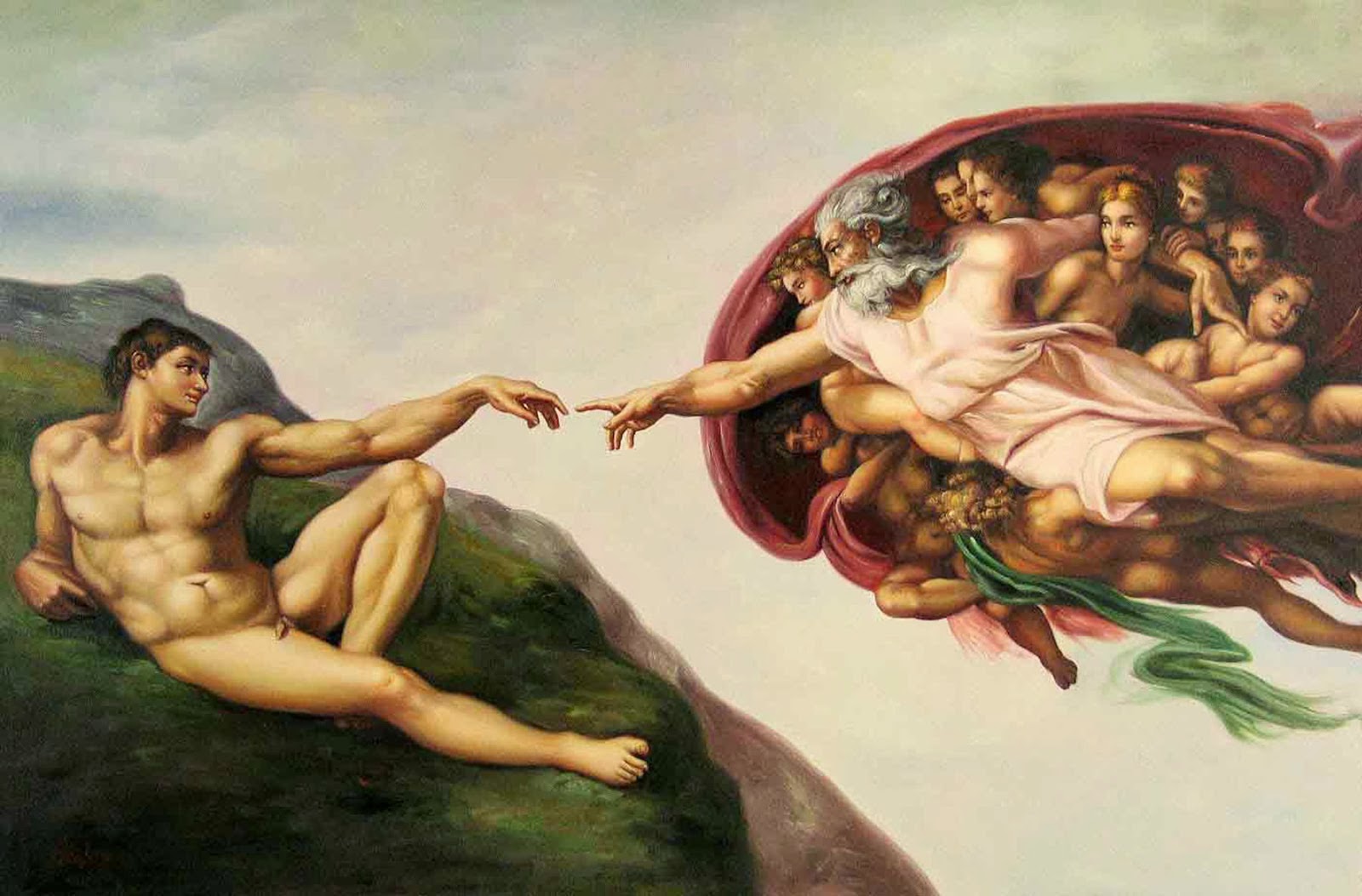
Can Men Be Gods? What the Bible says about exaltation.

My friend T. S. sent me this question the other day, and I was somewhat amused to receive it, as I have been waiting for someone to send me just such a question since I started writing this blog.

Q: I have a nonmember friend who read a chapter in a world religion book about Mormons and it said that we believe we will become God and have our own planet someday and now she thinks we are freaks.  How do you respond to this and what scriptures are there in the Bible that support such a claim?

Sunday, June 6, 2010

Why Being a Child of God is Not Enough

“It is good to remember that you are always a child of God. This knowledge will carry you through the most difficult times in your life and will inspire you to accomplish remarkable things. However, it is also important to remember that being a [son or] daughter of eternal parents is not a distinction you earned or you will ever lose. You will always and forever remain a [son or] daughter of God. Your Heavenly Father has high aspirations for you, but your divine origin alone does not guarantee you a divine inheritance. God sent you here to prepare for a future greater than anything you can imagine.

The promised blessings of God to the faithful are glorious and inspiring. Among them are “thrones, kingdoms, principalities, and powers, dominions, all heights and depths.” And it takes more than a spiritual birth certificate or a “Child of God Membership Card” to qualify for these incomprehensible blessings” (Dieter F. Uchtdorf, “Living the Gospel Joyful,” General Women’s Meeting Address, Sept. 27, 2014).

We are all born “naturally” as natural descendants of Adam, who was God’s son. We are also the spirit sons and daughters of God. It is in this general sense that all men can be called children of God. All men are children of God, and (all things being equal) all men have the same claim to the love of their Father in Heaven.  Therefore we gain no particular distinction nor can we derive any special status above our fellows simply due to the fact of our divine heritage.  Our divine origin is important, and vital to know about, but being born into this world as a child of God does not automatically confer any kind of righteousness, merit, or status upon us; nor does our divine pedigree, in and of itself, guarantee salvation for us in any way.

“But how do we attain [these blessings]? The Savior has answered this question in our time: “Except ye abide my law ye cannot attain to this glory.  “For strait is the gate, and narrow the way that leadeth unto the exaltation. “… Receive ye, therefore, my law.”

For this reason, we speak of walking the path of discipleship.  We speak of obedience to God’s commandments.  We speak of living the gospel joyfully, with all our heart, might, mind, and soul” (Dieter F. Uchtdorf, “Living the Gospel Joyful,” General Women’s Meeting Address, Sept. 27, 2014).

If we wish to inherit all that the Father has, then we must become bound to him through more than just the mere fact of our parentage.  We were placed on this Earth in order that we might have the opportunity, over time, to prove ourselves, and our loyalty, to God. We demonstrate this loyalty and love by steadfastly and valiantly keeping His commandments, and by binding ourselves to God through covenants made by means of ordinances such as baptism and receiving the gift of the Holy Ghost by the laying on of hands.

Putting Off the Natural Man

Why must we do all of these things in order to inherit all of the blessings which the Father wishes to give His children?  As His children, should we not have some natural claim to our divine inheritance?

Unfortunately, we each make mistakes, and commit sins and transgressions. In our “natural” fallen state, which comes upon us as a consequence of the fall of Adam and Eve, we become “carnal, sensual, devilish, knowing evil from good” and thus, through sin, we become estranged from our Father in heaven. If we persist in our willful defiance of God’s laws (to say nothing of His love for us), we will become estranged from Him to the point that we may become “an enemy to God” even in this life (see Mosiah 16).

Sunday, December 6, 2009

A few thoughts on Hope as a principle of the Gospel


A friend of mine asked me for some insights on Hope and belief when she was asked to speak on the subject in church. I have posted my response here in the hope that you will find my thoughts on the subject instructive and perhaps even enlightening.

You might choose to focus on the fact that hope is not only an essential attribute of Christ that we ought to strive to emulate, but that it is also one of the 3 paramount spiritual gifts that any Christian might aspire to receive. Moreover it is one of the great principles of salvation and exaltation.
Have you heard the biblical phrase "faith, hope, and charity"? That phrase comes from Paul's great treatise on the nature of spiritual gifts. It stretches from 1 Corinthians 12 through 14, but 13 is all about faith, hope and charity (mainly charity, but as you read you'll see that they are all inextricably interconnected-you can't truly possess one of these attributes without possessing the others.)
Web Statistics